
Reviewed · LAVENDER & FLOWER FIELD TOURS
Hokkaido Highlights of Flower Blossom, Asahiyama Zoo& Blue pond「Aoi-ike」!
Hokkaido’s countryside is the star here: flower fields, Biei’s striking Blue Pond, famous roadside trees, and the wildlife displays at Asahiyama Zoo all fit into one long day from Sapporo. It is an efficient way to reach places that are awkward to combine by train and bus.
In This Article
- Key points to know before booking
- Why this day trip works from Sapporo
- Farm Tomita and the problem of flower timing
- Biei’s Blue Pond in 30 minutes
- Famous trees and Biei farmland from the road
- Asahiyama Zoo’s unusual animal displays
- Ningle Terrace and the craft-cottage stop
- Guides, language, and the rhythm of a mixed group
- The 12-hour schedule and what to pack
- Weather, cancellation, and seasonal choices
- Who should book this Hokkaido day tour?
- Should you book it?
- FAQ
- Where does the tour start?
- What time does the tour begin?
- Where does the tour finish?
- How long does the experience last?
- Is lunch included?
- Is admission to Asahiyama Zoo included?
- How much time is allowed at Farm Tomita?
- Can the Blue Pond visit be changed?
I like the air-conditioned coach, which turns a difficult self-drive day into a simple one, and I like the mix of scenery and animals. Guides such as Shizuka have made special efforts to help English-speaking passengers, while Mr. Noguchi has used a mobile translator to pass along instructions.
The trade-off is time. You may spend two hours at the zoo but only 30 to 50 minutes at Farm Tomita, and traffic can shorten the day. If lavender fields are your main goal, this schedule may feel too rushed.
Key points to know before booking
- Farm Tomita time changes by season: You get 30 minutes from April 26 to May 31 and October 1 to November 3, or 50 minutes from June through September.
- July is usually best for lavender: Earlier or later visits can still be pretty, but the full purple display is not guaranteed.
- The Blue Pond can be crowded: Heavy seasonal traffic may lead to a change of plans, with a hill northwest of Biei used instead.
- Asahiyama Zoo receives about two hours: Lunch is not included, and the tour expects you to eat at the zoo.
- The tour is mainly Japanese-language: English support varies, although some guides provide clear translation or use a phone translator.
- This is a long group day: Departure is at 7:35 a.m., return is around 6 p.m., and the bus can carry up to 45 people.
Why this day trip works from Sapporo
Sapporo is an easy base for Hokkaido, but the countryside attractions around Furano, Biei, and Asahikawa are spread far apart. Reaching Farm Tomita, the Blue Pond, and Asahiyama Zoo independently in one day would require careful connections, early starts, and little room for delays.
This tour solves that problem with one coach and one fixed route. You can look out at the fields, rest between stops, and let the driver handle the long distances. That is the main value of the $87.76 price: you are paying for transport, the driver-guide, taxes, and the listed admissions, not just for entry to one attraction.
The price is especially fair if you are traveling alone or do not want to rent a car. A rental car gives you more freedom, but it also brings navigation, parking, and the risk of getting stuck in seasonal traffic. Here, the schedule is fixed, but the logistics are much easier.
The group can reach 45 people, so this is not a private sightseeing day. You will need to stay alert for meeting times, follow instructions, and accept that the pace is designed for the whole bus rather than for your own interests.
A few more Sapporo tours and experiences worth a look


Farm Tomita and the problem of flower timing

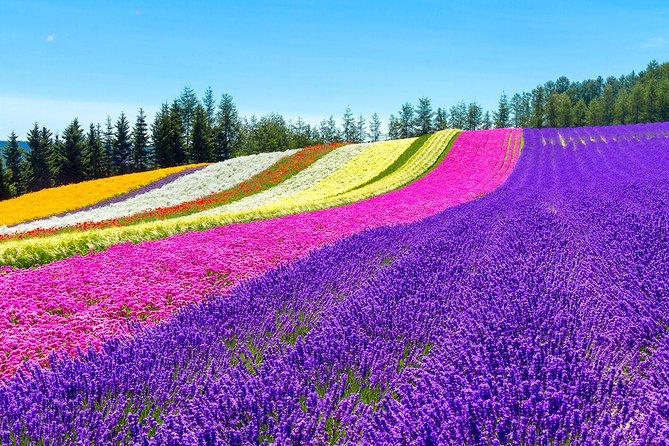
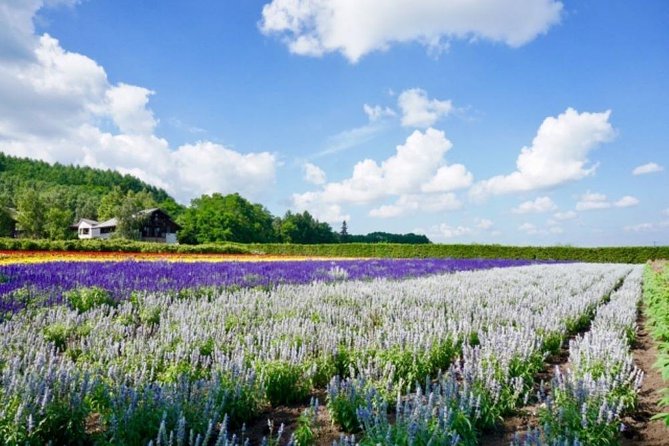
Farm Tomita is the part of the day many people picture first. In summer, rows of flowers sweep across the hills, with lavender as the main attraction. The best lavender display is usually in July, though the exact timing depends on the season.
Your stop is 50 minutes from June through September. That sounds reasonable, but it goes quickly once you walk among the flower beds, take photographs, and look around the farm shops. Several parts of the property may be worth seeing, so you will need to choose rather than inspect every corner.
Outside the summer period, the visit is cut to 30 minutes. That shorter stop applies from April 26 to May 31 and October 1 to November 3. You may still find attractive flowers, but do not book this trip late in the year expecting broad lavender fields.
The timing is the chief weakness for flower lovers. If you want a relaxed visit with plenty of time for photographs, this tour gives you less freedom than a dedicated Furano flower trip. Some people would gladly trade part of the zoo visit for more time at Farm Tomita.
I would book in July if the flowers are your priority. If you are visiting outside July, treat Farm Tomita as one scenic stop in a bigger Hokkaido day, not as the sole reason to go.
Biei’s Blue Pond in 30 minutes
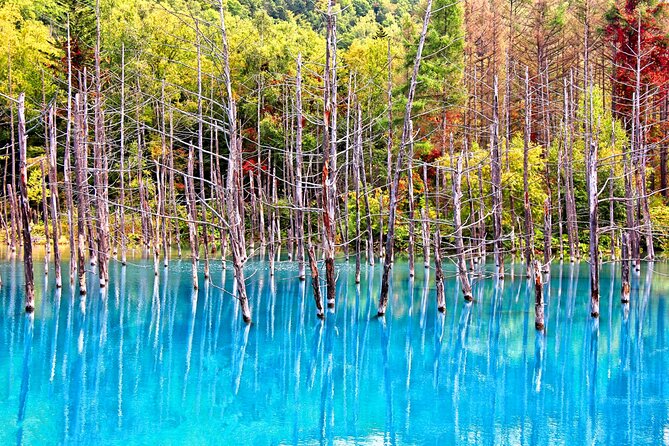
The Shirogane Blue Pond is a compact stop, but it can be the visual highlight of the day. Its unusual color comes from mineral-rich water connected with the Biei River. Light on the water changes the effect, and the pale trunks of dead birch and larch trees rise from the pond like a carefully arranged painting.
You get about 30 minutes here. That is enough to walk to the viewing area, take photographs, and appreciate the pond, but not enough for a long wander. The site is set up for a short visit, so think of it as a precise photo stop rather than a quiet nature walk.
Crowds and traffic matter. Biei draws many sightseeing buses, particularly during the popular flower season. The operator warns that heavy traffic may force a change to a hill northwest of Biei. That means the Blue Pond is not an absolute guarantee, even though it is a central part of the advertised route.
This uncertainty is worth accepting if you want to see several major sights in one day. It is less appealing if the Blue Pond is your one must-see location. For the best chance of getting the planned visit, choose a date with good weather and keep your schedule flexible.
Famous trees and Biei farmland from the road
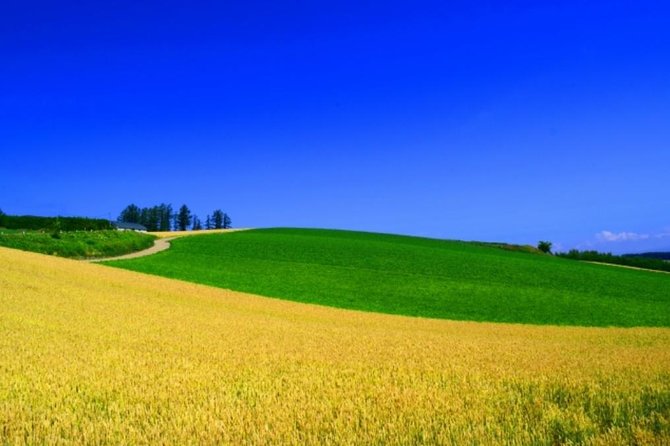
The countryside around Biei is known for smooth fields and isolated trees that have become local icons. Depending on the route and viewing conditions, you may see the Parent and Child Tree, the Seven Star Tree, and the Ken and Mary Tree.
These are generally viewed from the bus rather than treated as long walking stops. That distinction matters. You get a broad look at the patchwork farmland and the gentle hills, but you may not have time to get close to each tree or frame a careful photograph.
Even so, the drive adds something that a list of formal attractions cannot. Between the main stops, you see the changing character of Hokkaido, from open fields to distant hills and rural roads. It also gives you a useful rest period after the early start.
Keep your camera ready, but do not expect a separate photo session at every famous tree. The value is in seeing the countryside as a whole.
Asahiyama Zoo’s unusual animal displays
Asahiyama Zoo is the longest scheduled attraction, with about two hours inside. It is in northern Hokkaido and is known for displays built around animal behavior rather than simple rows of cages.
At the Seal Hall, seals can swim through a glass tube called Marine Way. The design lets you watch them move through the water from close range. The Hippopotamus Hall also aims to show animals in settings that reflect parts of their normal behavior, with ostriches and warthogs included in the display.
Penguins are another draw for many families. The zoo can be a lively and memorable stop if you enjoy watching animals move, swim, and interact rather than simply looking at them behind a barrier.
Two hours is enough to see selected highlights, but it is not enough to cover every area slowly. The zoo may also feel compact or enclosed if you are used to very large zoos. Warm weather can make walking around tiring, and you will need to decide which animals matter most to you.
This is where opinions split. Families and people who enjoy animal behavior may want the full two hours. If your main interest is Hokkaido scenery, you may feel the zoo takes too much of the day, especially when Farm Tomita is in peak bloom.
Lunch is at your own expense and is scheduled at the zoo. That is convenient in one sense, since you do not need to leave the attraction to eat, but your meal will reduce the time available for animal displays.
A few more Sapporo tours and experiences worth a look


Ningle Terrace and the craft-cottage stop
The tour description also includes cottages where craftspeople work, commonly associated with Ningle Terrace near Furano. Small wooden cabins and forest paths give this stop a different feel from the large sightseeing attractions.
You can browse handmade goods, walk the trails, and look into the little shops. It is a pleasant change of pace, especially after time on the bus. It may appeal more to you if you like crafts, quiet paths, and small-scale shopping than if you are seeking another major natural sight.
Time can be tight here. You are unlikely to inspect every cabin in detail, so decide in advance whether you want to shop, photograph the setting, or simply walk through. Some people find the stop charming, while others feel it does not justify the extra driving time.
Because the supplied schedule highlights Farm Tomita, the Blue Pond, the trees, and the zoo, confirm the exact day’s running order and included stops when you book. Traffic and operating conditions can affect the route.
Guides, language, and the rhythm of a mixed group
This is a mixed tour with Japanese participants, and Japanese is the main language used on the bus. English support is available, but the quality can vary by guide and by how information is relayed.
Shizuka has been praised for being friendly, cheerful, and careful with the overseas passengers on board. Helen has also been described as helpful, and Mr. Noguchi has used a mobile translator to make instructions clearer. Those examples show what good support can look like, but you should not assume every departure will have the same level of English explanation.
Some departures may provide only a short English summary after longer Japanese commentary. If you need detailed background at each stop, this may frustrate you. If your main need is practical help, such as where to meet and when to return to the coach, the arrangement may be enough.
I would keep your phone ready for translated instructions, save the meeting point details, and listen carefully for return times. No bus seat requests are accepted, so you should also be comfortable with a standard group-tour setup.
The 12-hour schedule and what to pack

The meeting point is outside the ANA Crowne Plaza Sapporo by IHG at 7:35 a.m. The tour returns to Sapporo Station Bus Terminal at about 6 p.m. That makes this a full 12-hour day, with a substantial portion spent on the road.
The long drives are not wasted if you enjoy rural views or need a break between stops. Still, the day can feel tiring by the end. Do not schedule an important evening train, flight, or nonrefundable dinner reservation too close to the expected return.
Traffic is the main risk. The operator warns that the schedule may change or be cut because of congestion, weather, or other events. Do not join this tour on your final day in Hokkaido, especially if you must catch a flight. No compensation is provided for delays that disrupt later plans.
Bring:
- A phone or camera with enough battery, since the coach may not have charging outlets.
- Comfortable shoes for the zoo, flower farm, and cottage paths.
- Money for lunch at Asahiyama Zoo.
- Water and weather-appropriate clothing.
- Your booking confirmation and a clear reminder of the meeting time.
You must arrive on time. If you miss the departure, you cannot join later and there is no refund.
Weather, cancellation, and seasonal choices
The experience depends on good weather. If poor conditions such as a typhoon force cancellation, you are offered another date or a full refund. A weather cancellation notice is expected by email the day before, so check your messages.
You can cancel for a full refund up to 24 hours before the start time. Changes or cancellations made inside that window are not accepted. These rules matter because the tour has limited departures and a tightly arranged coach schedule.
Season should guide your decision:
- July: Best choice for lavender, with the strongest chance of seeing Farm Tomita at its most famous.
- June through September: Longer Farm Tomita visit of 50 minutes, with flower displays likely to be the main visual appeal.
- Late April to May: Farm Tomita time is shorter, and lavender may not be in its main season.
- October to early November: The stop is again 30 minutes, and you should not expect summer flower scenes.
Weather also affects the Blue Pond. A sunny day can make the color and reflections more striking, while poor conditions may reduce the appeal or change the plan.
Who should book this Hokkaido day tour?
I recommend it for a first visit to Hokkaido when you want to see several well-known places without renting a car. Families may like the combination of flowers, animals, and short sightseeing stops. Solo visitors also get an easy way to leave Sapporo and see the countryside at a reasonable fixed price.
It is a good fit if convenience matters more to you than independence. The coach, included admissions, driver-guide, and fixed route remove much of the planning work.
I would hesitate if you want long, unhurried visits, detailed English commentary, or serious wildlife photography. The Blue Pond may be replaced because of traffic, Farm Tomita can feel brief, and the zoo receives a large portion of the day.
Should you book it?
Book this tour if your goal is to cover Biei, Furano-area flower scenery, and Asahiyama Zoo in one ambitious day from Sapporo. At $87.76, it offers solid value for transport and admissions, especially when compared with arranging the same route alone.
Skip it if Farm Tomita is your central reason for visiting Hokkaido. You will likely be happier with a slower flower-focused outing. Also skip it on your last day, or anytime a late return could cause trouble.
For most first-time visitors with limited time, I see this as a practical sampler: broad coverage, good scenery, and a few compromises in pace.
FAQ
Where does the tour start?
It starts at the ANA Crowne Plaza Sapporo by IHG, at Kita 3-Jo, 1-chome 2-9 Nishi, Chuo Ward, Sapporo.
What time does the tour begin?
The scheduled start time is 7:35 a.m.
Where does the tour finish?
The tour ends at Sapporo Station Bus Terminal.
How long does the experience last?
The tour lasts approximately 12 hours, with an expected return around 6 p.m.
Is lunch included?
No. Lunch is not included, and you are expected to arrange your own lunch during the visit to Asahiyama Zoo.
Is admission to Asahiyama Zoo included?
Yes. Admission to Asahiyama Zoo is included, along with all listed activities and fees.
How much time is allowed at Farm Tomita?
The stop lasts 30 minutes from April 26 to May 31 and from October 1 to November 3. From June through September, it lasts 50 minutes.
Can the Blue Pond visit be changed?
Yes. Heavy traffic during the tourist season may lead to a change of sightseeing location, with a hill northwest of Biei used depending on conditions.
More Lavender & Flower Field Tours in Sapporo

More Asahiyama Zoo Tours in Sapporo
More Biei Blue Pond Tours in Sapporo
More tours in Sapporo we've reviewed


Lavender & Flower Field Tours, compared.
 ★ 4.0Sapporo: Furano Flower Sea & Biei Blue Pond Tour w/ PickupFrom $77
 ★ 4.5Hokkaido Lavender farm & Furano Flower Tour from SapporoFrom $69
 ★ 4.6Sapporo: Furano Lavender & Biei Blue Pond Tour with LunchFrom $94
 ★ 4.0Shikisai-no-Oka and Furano Tour with buffet lunch from SapporoFrom $94
 ★ 4.2From Sapporo : Hokkaido Furano Tomita Farm Joiner TourFrom $15010 hours
The lists this tour appears in