
Reviewed · BIEI TOURS
Furano & Biei 4 hour Tour: English Speaking Driver only, No Guide
Furano and Biei are easiest to enjoy by car, especially when you want flower fields, country roads, and the Shirogane Blue Pond in one short outing. This private four-hour tour gives you an English-speaking driver, hotel pickup and drop-off, and room to shape the day around three or four stops.
In This Article
- Key points at a glance
- Why a private car helps in Furano and Biei
- Farm Tomita and the July lavender rush
- Ningle Terrace after dark
- Furano Cheese Factory for local flavor
- Flower Land Kamifurano from June to September
- Furano Wine Factory and the taste of the region
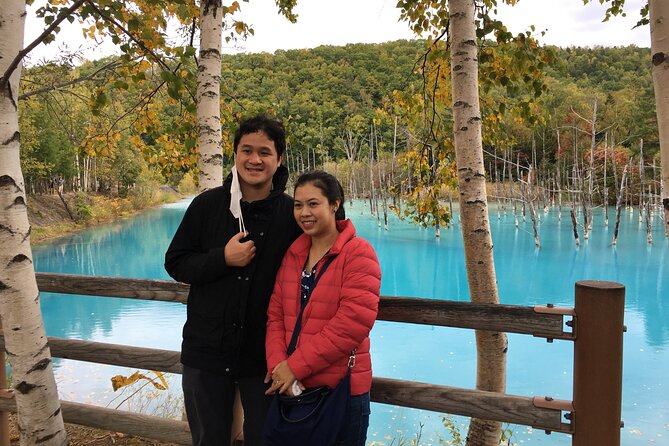
- Shirogane Blue Pond, Biei’s most striking stop
- Zerubunoka Atomunooka and Biei’s open views
- What the English-speaking driver can and cannot do
- Who gets the best value from four hours?
- Should you book this Furano and Biei tour?
- FAQ
- How long is the Furano and Biei tour?
- Where does pickup take place?
- Is the tour private?
- Is an English-speaking guide included?
- How many stops can I choose?
- Is the price charged per person?
- Are entrance fees included?
- Are highway, parking, and fuel costs included?
- Can I cancel for a full refund?
I like the freedom to choose between Farm Tomita, Ningle Terrace, the Furano Cheese Factory, Furano Wine Factory, and Biei’s famous Blue Pond. I also like that highway fees, parking, fuel, and private transport are included. The main catch is important: this is not a guided tour, so your driver handles transport rather than providing a full historical or cultural commentary.
Key points at a glance
- Choose three or four stops: You can build a flower-focused, food-focused, or mixed Furano and Biei outing.
- Start from Furano or Asahikawa: Hotel pickup and drop-off make this useful when public transport would eat up your limited time.
- Farm Tomita is best early: July brings the famous lavender, while the seven-color flower rows create Furano’s classic view.
- Blue Pond needs realistic timing: It is about one hour from the listed stop schedule, so adding it may mean giving up several Furano stops.
- Your driver is not a licensed guide: You get English-speaking driving assistance, but not a narrated tour.
- Confirm the vehicle capacity: The price is shown as $346.17 per group, with one section saying up to three and another saying up to six passengers.
Why a private car helps in Furano and Biei
The Furano and Biei area spreads across rural Hokkaido. Its attractions are not packed along one walkable street, and a four-hour visit can disappear quickly if you are waiting for buses or changing trains. A private car lets you connect several places without carrying your day around a timetable.
The tour runs for about four hours and includes an air-conditioned private vehicle. Pickup and drop-off are offered from your hotel in Furano or Asahikawa. That matters most for families, small groups, and anyone with a short stay who wants to see more than one major sight.
The price is $346.17 per group, rather than per person. For three people, that works out to about $115.39 each before attraction costs. For a larger party, the value could improve, but you should confirm the allowed capacity before booking because the supplied details conflict. One section says the group price covers up to three passengers, while another says up to six.
The included highway fees, parking fees, and fuel surcharge make the price easier to judge. You are not watching the meter rise as the car moves between rural sights. Admission fees, food, drinks, workshops, and personal purchases are separate.
A few more Hokkaido tours and experiences worth a look

Farm Tomita and the July lavender rush
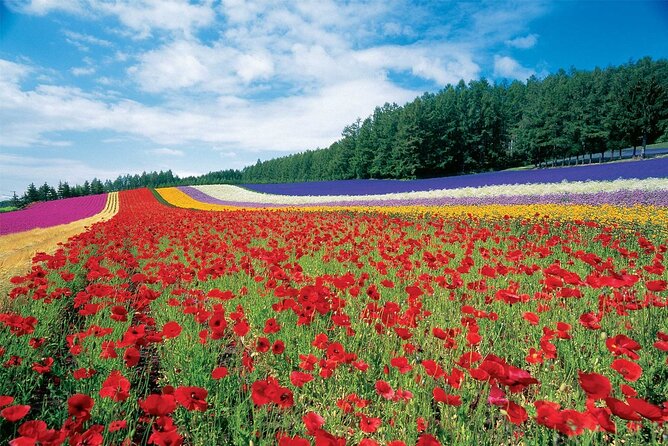
Farm Tomita is the natural centerpiece for a first visit to Furano. Lavender has been grown here since 1958, and the farm is closely tied to the image most people carry of the region: long rows of flowers spread across open fields, with the colors arranged like a rainbow.
The most memorable view comes from the mix of seven flower colors. Purple lavender shares the scene with white baby’s breath, orange California poppies, and other blooms. You can walk through the grounds, take photographs, and stop at the gift shop for lavender products to bring home.
Timing matters more here than at most other stops. The suggested visit is early in the morning, when the fields are likely to feel more peaceful. Lavender East, about four kilometers away, offers broad fields devoted mainly to lavender, but that seasonal display is limited to July. If lavender is your main reason for coming, July is the key month.
The admission fee is not included. Farm Tomita is the kind of stop that can easily expand beyond the planned hour, especially if you want photos and time in the shop. On a four-hour tour, tell your driver in advance if this is your priority so the rest of the route does not become rushed.
Ningle Terrace after dark
Ningle Terrace gives the tour a change of pace. Near the Shin Furano Prince Hotel, this forest shopping area is made up of 15 log houses. Its name comes from a dwarf in a storybook, and the setting feels more like a small woodland craft village than a standard shopping center.
You can browse handmade goods and items with nature-based themes. The Owl’s Forest focuses on owl products, while the Glass House features ice and snowflake designs. Chuchu’s House is a coffee shop, and Paperwork House sells handmade postcards.
You can also make things yourself. Candle making, instrument making, and paper crafts are listed among the popular choices. These activities can suit families, but you need to ask about timing and availability because a hands-on project can use much of a four-hour tour.
Ningle Terrace changes character after sunset, when the log houses and paths are lit. That makes it an attractive late-day stop, though it competes with Farm Tomita’s early-morning advantage. You probably cannot have the ideal morning light at the lavender farm and the full evening mood at Ningle Terrace within the same short outing unless your schedule is arranged very carefully.
Furano Cheese Factory for local flavor
The Furano Cheese Factory is a good pick when you want something beyond flower photographs. The cheese is made from milk supplied by cows raised in the Furano area, and glass windows let you watch the production process.
On the second floor, you can see the history of cheese making and the tools used along the way. A mechanical cow provides a playful milking activity, which gives children something to do while adults look at the displays.
The food side is the real reason to allow time here. The factory makes cheese gelato along with flavors such as pumpkin and sugar cane. You may also find unusual local varieties, including Furano wine cheese and onion cheese, as well as the factory’s own butter.
Cheese, ice cream, or butter-making sessions are available when reserved ahead of time. That reservation detail is important. Do not assume you can arrive and join a workshop on the spot. Admission and any activity charges are not included in the tour price.
I would choose this stop for families, food lovers, or anyone who has already seen flower gardens on another day. It is less useful if your one goal is to cover as many famous views as possible.
Flower Land Kamifurano from June to September
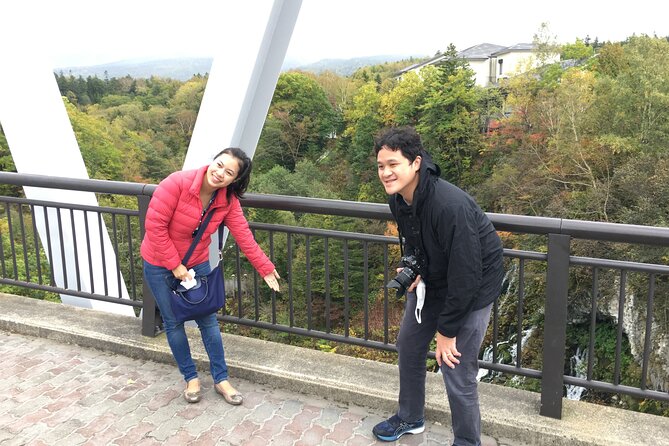
Flower Land Kamifurano offers a broad garden visit with a changing seasonal display. From June through September, the gardens may show lupines, lavender, poppies, lilies, cosmos, marigolds, and sunflowers as different blooms come into season.
You can walk through the grounds or use the tractor bus. The gardens are spacious, so the bus may help if you want to save your legs or keep the stop manageable for children. Lavender pillow making and pressed-flower postcard activities add a hands-on touch.
The garden also connects flowers with Hokkaido produce. Asparagus appears from May to June, melons from July to September, and corn from August to September. In fall, the site offers all-you-can-eat potatoes and onions. These details make the stop more than a flower photo opportunity, but seasonal availability matters.
Like the other attractions, entry is not included. If you choose both Farm Tomita and Flower Land Kamifurano, you are giving much of your four-hour visit to flower gardens. That can be exactly right in summer, but it leaves little room for Biei.
A few more Hokkaido tours and experiences worth a look


Furano Wine Factory and the taste of the region
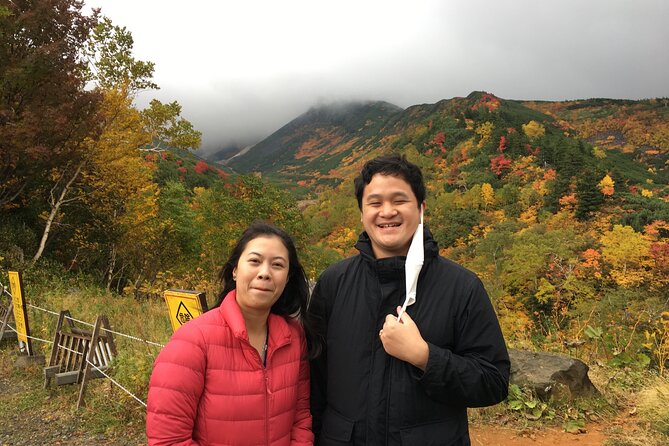
Furano is known for wine as well as lavender. The Furano City Grape Research Institute began work in 1972, focusing on grape varieties suited to the area and on local wine production.
At the red-brick factory, you can see the production and fermentation process. The shop sells several types of wine, grape juice, and gifts, and tasting is available. If you prefer not to drink alcohol, the grape juice gives you another way to sample the local product.
The factory also has special light-ups when grape blossoms are in bloom. That is a seasonal detail worth checking if you are visiting at the right time, though the tour information does not provide exact dates.
This is a sensible choice for adults who enjoy regional food and drink. It is less compelling for young children, and it may feel like a quick shop visit if you are expecting a long winery tour. Ask your driver how much time remains before deciding to add it.
Shirogane Blue Pond, Biei’s most striking stop
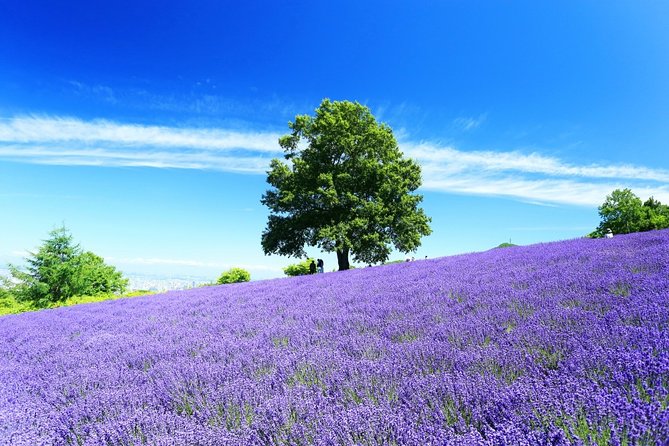
The Shirogane Blue Pond is the strongest reason to include Biei in your route. Its unusual blue color comes from aluminum associated with the Shirakane hot springs upstream. When sunlight reaches the mixture, short blue wavelengths spread through the water, producing the famous blue appearance.
Pine trees rise from the pond and make the view more unusual. The color can look different with the light and weather, so the stop is not simply a guaranteed painted-blue scene. The best viewing conditions are described as an early sunny morning.
Winter brings light-ups, adding another reason to visit outside the summer flower season. Nearby hot springs offer another way to spend time in the area, though the four-hour tour does not promise a hot spring visit.
The key practical point is distance and trade-off. The Blue Pond is listed as a one-hour stop, and reaching Biei from Furano uses driving time. If you add it to Farm Tomita, Ningle Terrace, the Cheese Factory, and Flower Land, you are trying to fit too much into half a day.
I would build the tour around the Blue Pond plus one or two Furano stops, not treat it as an extra sight squeezed into the final hour. A private driver helps, but a private car cannot remove the distance between towns.
Zerubunoka Atomunooka and Biei’s open views
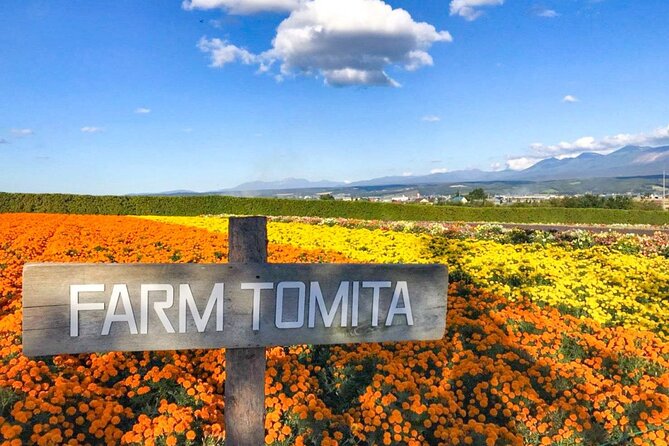
Zerubunoka Atomunooka is a flower garden on a hill in Biei. Its name uses the final letters of the Japanese words for wind, scent, and play, reflecting the idea of playing among fragrant breezes.
Flowers begin in May and continue into early October. Depending on the season, you might see lavender, sunflowers, poppies, and other blooms. You can walk or use a cart, then stop at the restaurant, café, or shop for original gifts.
The Ken and Mary Tree is nearby. It appeared in commercials and gives you another recognizable Biei sight without requiring a long separate visit.
This stop works well if you want a slower garden break and a taste of Biei’s open rural setting. It is not the best choice if your main aim is the Blue Pond, because both require time on the Biei side of the route. Ask the driver to map out the order before setting off.
What the English-speaking driver can and cannot do
The tour includes an English-speaking driver, not a licensed local English-speaking guide. That distinction affects the experience. You can expect help with driving, pickup, drop-off, and getting between selected sights, but you should not book this expecting detailed commentary at every stop.
That arrangement suits you if you already know which places interest you and prefer independence once you arrive. It is also useful if your main problem is transport rather than interpretation.
If you want detailed explanations of Furano’s farming, Biei’s scenery, wine production, or the history of each attraction, this may feel limited. The tour description specifically excludes a licensed local English-speaking guide.
The itinerary is customizable, with three or four sites chosen from the available list. I recommend deciding on your top two stops and one backup before the pickup. Then you can use the driver’s local routing help without spending half the tour debating options.
Who gets the best value from four hours?
I see the best value for a small group that wants a private ride and has a clear plan. Families can avoid juggling public transport, and couples or friends can choose stops that match their interests instead of following a fixed group schedule.
The tour is especially useful from Asahikawa or Furano when hotel pickup saves a separate transfer. Air conditioning is a welcome feature during summer, when flower season is at its busiest.
The four-hour limit is also the main restriction. You cannot see every listed attraction properly in one half-day. A route focused on Farm Tomita, Ningle Terrace, and the Cheese Factory is more realistic than trying to include those three plus Blue Pond and a Biei garden.
Only a small amount of feedback is available, but the one published account praised the beauty of summer, cool pleasant weather, and the private format as a memorable way to see the area. That matches the tour’s strongest point: it gives you a comfortable way to experience Hokkaido’s summer sights at your own pace, within a tight schedule.
Free cancellation is available until 24 hours before the start time. If poor weather forces cancellation, you are offered another date or a full refund. Car seats and booster seats are limited, rear-facing seats are not available, and you must contact the provider directly if you need one. Service animals are allowed, and most people can participate.
Should you book this Furano and Biei tour?
Book it if you want private transportation, flexible stops, and hotel pickup more than a formal guided tour. It is a practical choice for a small group, particularly when you want to combine one famous flower site with one food or shopping stop.
I would not book it without first confirming the passenger limit and agreeing on the route. The conflicting capacity details, up to three in one place and up to six in another, need clarification. I would also ask whether the planned timing supports the Blue Pond from your pickup location.
For a four-hour outing, choose three stops at most if one is in Biei. Make Farm Tomita the early priority in July, or choose Blue Pond first if its unusual color matters most to you. With realistic expectations and a short list, this tour can give you a comfortable, good-value introduction to Furano and Biei without wasting time on rural connections.
FAQ
How long is the Furano and Biei tour?
The tour lasts approximately four hours.
Where does pickup take place?
Pickup and drop-off are offered from your hotel in Furano or Asahikawa.
Is the tour private?
Yes. Only your group participates in the private activity.
Is an English-speaking guide included?
An English-speaking driver is included, but a licensed local English-speaking guide is not included.
How many stops can I choose?
The tour includes a customizable itinerary with three or four sites chosen from the listed attractions.
Is the price charged per person?
No. The listed price is $346.17 per group. The provided details differ on the maximum group size, so confirm whether your booking allows up to three or up to six passengers.
Are entrance fees included?
No. Entrance fees, when applicable, are paid separately by you.
Are highway, parking, and fuel costs included?
Yes. Highway fees, parking fees, and the fuel surcharge are included.
Can I cancel for a full refund?
Yes, if you cancel at least 24 hours before the experience start time. Cancellations or changes made less than 24 hours beforehand are not refunded or accepted. If poor weather causes the operator to cancel, you are offered another date or a full refund.
More Private Car Tours in Hokkaido
More Furano Tours in Hokkaido
More Biei Tours in Hokkaido
More tours in Hokkaido we've reviewed
Biei Tours, compared.
 ★ 5.0[Biei/Furano] One-day sightseeing by private car!From $596
 ★ 4.0Sapporo: Furano Flower Sea & Biei Blue Pond Tour w/ PickupFrom $77
 ★ 4.6Sapporo: Furano Lavender & Biei Blue Pond Tour with LunchFrom $94
 ★ 5.0Furano & Biei 6 hour Tour: English Speaking Driver only, No GuideFrom $548
 ★ 5.0Private Car Tour of Furano and Biei in Hokkaido with Local GuideFrom $1,311
 ★ 5.0Furano Biei Tour Sapporo DEP: English Speaking Driver, No GuideFrom $910
 ★ 5.0Furano & Biei Customised Private Day Tour (Up to 8 Pax/11 Hours)From $759
 ★ 4.8Hokkaido Asahiyama Zoo& Biei Blue pond Tour with Local GuideFrom $69
The lists this tour appears in