
Reviewed · BIEI TOURS
Snowshoeing on a Sparkling Biei Hill & Winter Cafe Time
Biei’s winter fields are usually closed to casual visitors, but this outing takes you onto a local farm with the owner’s permission. You walk a snowy hill in quiet, open scenery, with time for snow angels, snow fights, photos, and simple games rather than a rushed march.
In This Article
- Key points
- Why this quiet Biei hill feels special
- Snowshoeing without a technical learning curve
- A hill made for play, not just walking
- The 150-minute schedule and what it means
- The cafe stop is more important than it sounds
- What the $64 price covers
- Dress for snow, not for a city stroll
- Who will enjoy this most
- What the guide adds
- Small details to settle before you book
- Should you book the Biei snowshoe outing?
- FAQ
- Where does the activity begin?
- How long does the experience last?
- Is transportation included?
- Do I need previous snowshoeing experience?
- What equipment is provided?
- What should I wear?
- Is a cafe drink included?
- What happens if the cafe is closed?
I like the private-group format, which gives the English-speaking Dohoku Local room to adjust the pace and help with snowshoes. I also like the finish: a hot drink in a nearby cafe, with views across the white fields. The main catch is the clothing. You need proper waterproof winter gear, especially insulated pants, and the farm has no toilets or shops.
Key points
- Private access to a local farm: Enter a snowy Biei field that is normally off-limits, with permission from the farmer.
- Snowshoeing for beginners: No previous experience or high fitness level is required, though you still need to walk uphill in snow.
- Afternoon light can add color: Sunlight may make the snow sparkle with multicolored tones later in the day.
- Warm finish at a local cafe: One drink is included, and the cafe offers a welcome change from the cold.
- Useful gear is supplied: Snowshoes, poles, gaiters, hand warmers, and other warming items are provided.
- Plan your clothing carefully: Jeans, soft leather or suede shoes, open-toed shoes, skirts, and inadequate winter clothing are poor choices.
Why this quiet Biei hill feels special
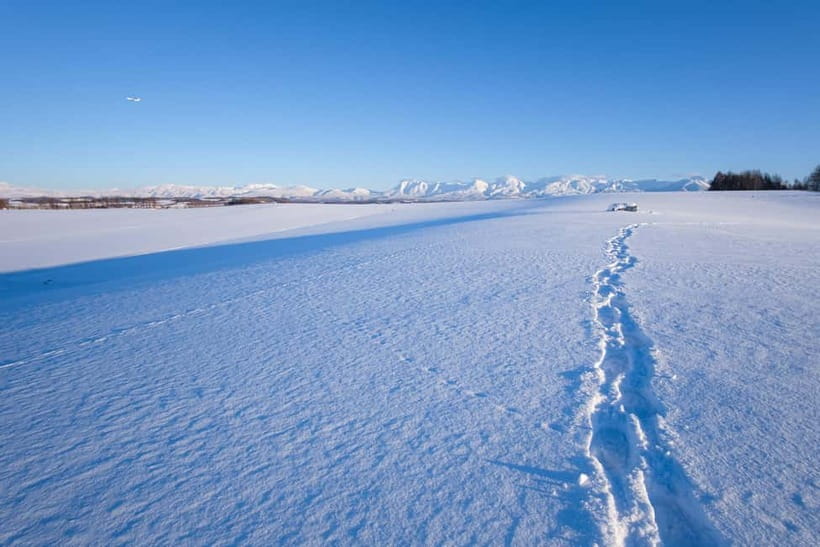
Biei is famous for broad farm fields, rolling hills, and clean winter views. Snow changes the whole mood. The familiar patchwork of fields becomes a smooth white expanse, and the lack of summer crowds makes the countryside feel still and spacious.
The special part here is not simply seeing snow. It is getting permission to walk into a working farm area that you could not normally enter on your own. That gives the outing a more local character than standing at a roadside viewpoint and taking a quick photo.
You meet at JR Biei Station, then ride with your guide to the farm. Transportation is included, so you do not need to arrange a taxi or figure out which rural road leads to the hill. The drive also keeps the experience practical in winter, when snow and cold can make short distances feel surprisingly awkward.
The farm itself does not have visitor facilities. There are no toilets, vending machines, or convenience stores, so use the facilities at or near Biei Station before leaving. This is a small detail, but it matters more in cold weather, especially if you are traveling with limited time.
Snowshoeing without a technical learning curve
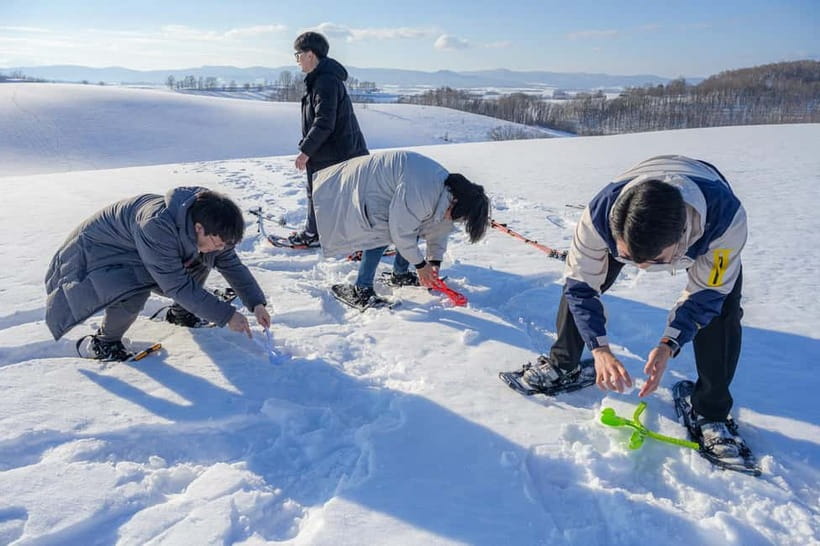
Snowshoeing is a good match for this setting because it spreads your weight across the snow. You are not expected to ski, balance on a narrow trail, or know special techniques. The activity is presented as suitable for beginners, and the guide supplies snowshoes and poles.
You will still need a basic level of mobility. The walk includes going up to the top of the hill, and snow can be uneven or tiring. This is not a chairlift outing or a short photo stop. You should be comfortable walking outdoors in winter conditions and spending a sustained period on your feet.
The guide helps you get set up with the equipment, including snow gaiters. Gaiters help keep snow from working its way into your footwear and lower legs, which is particularly useful when you leave a packed path and play in deeper snow.
The equipment is supplied, but your footwear still matters. Snowshoe grips can damage soft shoes, including leather or suede footwear. Waterproof outdoor shoes are required, and the operator accepts no responsibility for damage to unsuitable shoes. I would treat waterproof, sturdy footwear as essential rather than optional.
A hill made for play, not just walking
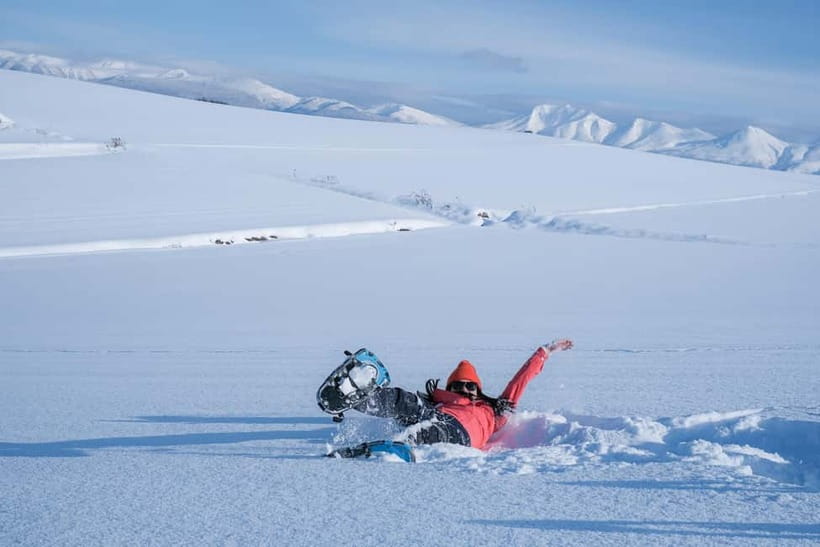
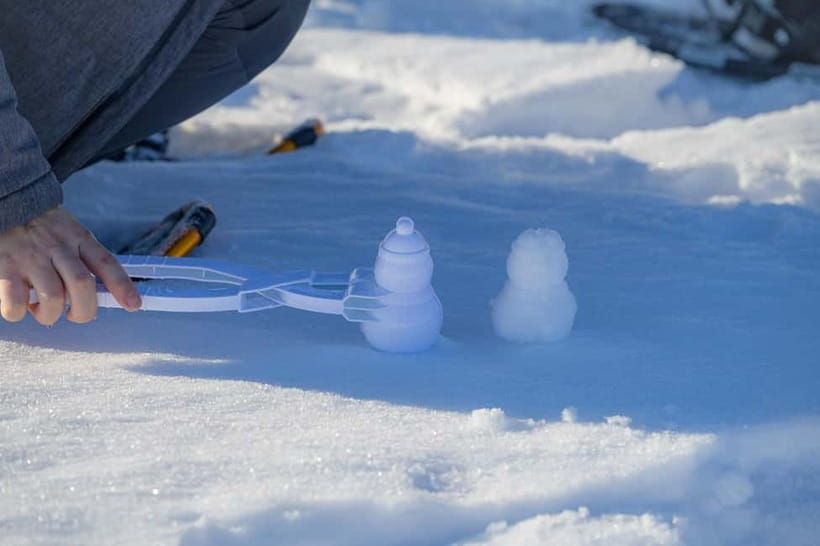
Many outdoor activities give you a fixed route and a fixed pace. This one leaves room to enjoy the snow itself. Once you reach the hill, you can make snow angels, start a snow fight, take photos, and play games that your Dohoku Local may bring along.
That freedom is valuable if you want a relaxed winter experience rather than a serious athletic outing. The focus is on being outside in Biei and enjoying the setting. You are not being tested on speed, distance, or snowshoe technique.
The hill is also the visual centerpiece. In sunlight, the snow can sparkle brightly. In the afternoon, the angle of the light may make those sparkles appear multicolored. The effect depends on the weather and sun, so it is best viewed as a natural possibility, not a guaranteed show.
You should bring sunglasses. Snow reflects a great deal of light, and a bright day can be hard on your eyes. A camera or charged smartphone is also worth carrying, provided you protect it from cold and moisture. The open white scenery gives you plenty of room for photographs, but remember that the most attractive views may not be beside a marked path.
The guide’s instructions matter here. The field may border another field where you do not have permission to walk. Stay with the group and follow directions about where you can go. Private access is part of the value of this activity, and respecting the farm keeps that arrangement possible.
The 150-minute schedule and what it means
The total experience lasts about 150 minutes, beginning and ending at Biei Station. The guided portion at Biei is listed as about 1.5 hours, with the remaining time used for transportation and the cafe stop.
That makes this easy to fit into a Biei day without consuming the entire schedule. You get a real outdoor activity, but you are not committing to a full-day excursion. Check the available starting times when booking, since the exact departure schedule is not fixed in the information provided.
The timing can affect the look of the snow. Afternoon light may be especially attractive for the sparkling effect, but winter days are short and conditions can change quickly. You should arrive ready to leave on time, with all winter clothing already on or easy to put on at the station.
At the end, you return to JR Biei Station. This is convenient if you are continuing by train or meeting other plans in town. The station also gives you a sensible place to use the restroom and gather anything you need before setting off.
The cafe stop is more important than it sounds
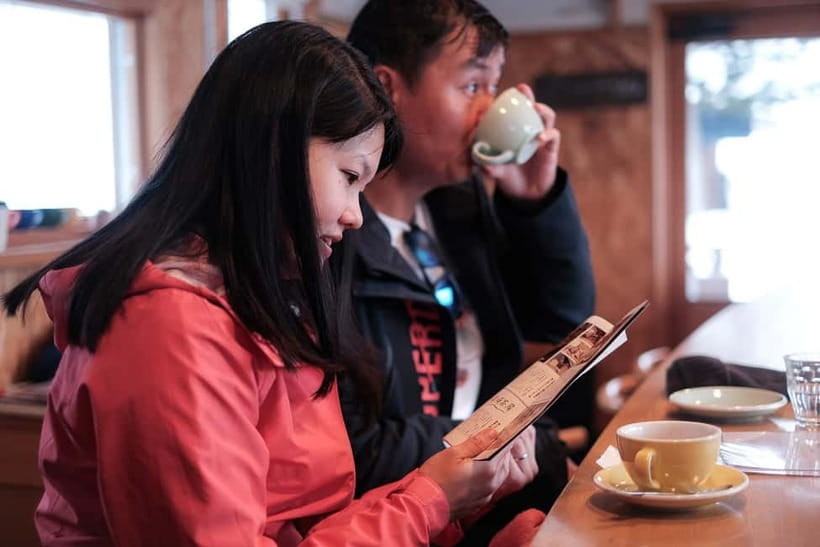
After the snowshoeing, you visit a nearby cafe with views over Biei’s snowy scenery. One drink is included. Additional food and drinks cost extra, so bring a credit card or cash if you want something beyond the included beverage.
A cafe stop can sound like a minor add-on, but in winter it changes the rhythm of the outing. Cold hands, damp layers, and flushed cheeks feel much better once you are indoors with a hot drink. It also gives you time to look back at the hill without standing in the wind.
The advertised cafe may close for a holiday or an unscheduled reason. If that happens, the guide will take you to another nearby cafe. You should therefore expect the warm drink and cafe break, but not treat one particular cafe as guaranteed.
One practical point: the supplied information does not promise a full meal. If you expect to be hungry after walking in the snow, plan separately for lunch or a snack in Biei. A cafe recommendation from Hattie was described as useful, though a popular place may have a queue. If your schedule is tight, allow extra time before making a train connection.
What the $64 price covers
At $64 per person, this is priced as a compact guided outing rather than a bare equipment rental. The cost includes transportation from Biei Station, snowshoes, poles, snow gaiters, hand warmers, other warming items, the guide, and one cafe drink.
That package has practical value. You do not need to locate a rural farm, rent gear separately, negotiate access, or guess where you are allowed to walk. You also avoid carrying snowshoes and poles through the rest of your Hokkaido trip.
The private-group setup improves the value if you want personal attention or are traveling with your own party. A guide can help with fitting equipment, explain where to walk, and adjust the pace within the limits of the group. It may be less attractive if you only want a cheap way to borrow snowshoes for an hour, since the guided transport and private access are central to the price.
The included drink is a pleasant extra, but it is not the reason to book. The real value is the access to the farm and the simple logistics. You are paying for a permitted winter setting that would be difficult to arrange independently.
Dress for snow, not for a city stroll
The operator is direct about clothing, and you should be equally serious. Bring warm layers, a jacket, long pants, gloves, a hat, scarf, and winter clothing suited to snow. Waterproof and insulated pants are specifically recommended.
Avoid jeans. Denim can become cold and uncomfortable when wet, and it does not provide the protection you need for kneeling, sitting, or falling into snow. Shorts, skirts, sleeveless tops, and light city clothing are not suitable.
Your outer layers should allow movement while keeping snow out. Snow gaiters are provided, but they cannot compensate for thin pants or shoes that absorb water. Wear waterproof shoes with a firm build, not soft leather, suede, open-toed shoes, or high heels.
Hand warmers are included, which helps, but you should not use them as a substitute for gloves. Bring your own hat and gloves, and dress in layers so you can adjust once you begin walking.
The activity is cancelled without charge in the event of blizzards or dangerous winds. Ordinary cold and snow are part of the experience, but dangerous conditions are not. Keep your plans flexible enough to handle a weather change.
Who will enjoy this most

This outing suits you if you want a short, gentle introduction to Hokkaido winter rather than a demanding backcountry trip. You do not need snowshoeing experience or a particularly high fitness level. A sense of adventure and comfort with outdoor cold matter more than technical ability.
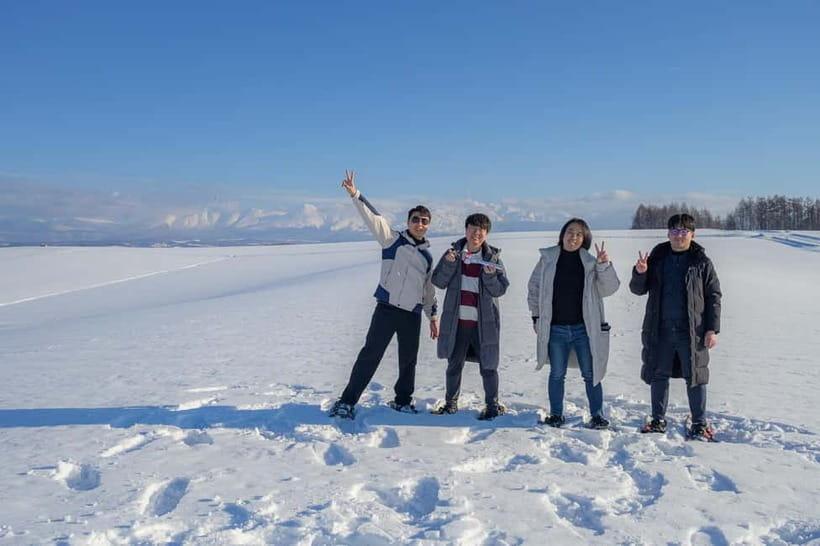
It is especially appealing if you value quiet scenery and personal space. The farm access can give you a peaceful stretch of white countryside without the feel of a busy attraction. The private group also makes it a good fit for friends, couples, or families with children aged 12 and older who can manage the walk.
The activity is not suitable for children under 12, wheelchair users, people with mobility impairments, or people with heart problems or high blood pressure. It is also not a good choice if you dislike cold weather, cannot walk in snow, or do not have suitable winter clothing.
The rules are strict about luggage and equipment. Large bags, oversize luggage, strollers, mobility scooters, wheelchairs that do not fold, walking frames, crutches, and walking sticks are not allowed. Smoking is not permitted in the vehicle or indoors, and unaccompanied minors cannot join.
What the guide adds
Your Dohoku Local is more than a driver. The guide arranges the farm access, helps with the snowshoe equipment, keeps the group within the permitted area, and leads you back to the station after the cafe.
The experience is offered in English. Guide Hattie has been noted for being kind and flexible, including helping fit the outing around other plans and offering a lunch suggestion. That sort of local help is useful in Biei, where rural transport and dining hours can be less predictable than in a large city.
The guide may also bring games for the snow. This keeps the activity from feeling like a silent uphill walk, though you are free to spend your time taking photographs or enjoying the view. Since the group is private, you can make your preferences clear at the start.
Small details to settle before you book
Cancellation is free up to 24 hours before the activity for a full refund. You can also reserve now and pay later, which helps if your Hokkaido schedule depends on weather or train plans.
Check the starting time and arrive at the waiting room inside JR Biei Station. Use the restroom and buy anything you need before departure. Bring a charged smartphone, camera if desired, cash, and a credit card, but keep your belongings small because large bags and luggage are not allowed.
The experience is short enough to combine with other Biei plans, but do not stack it too tightly against a train. Snow, equipment fitting, the cafe stop, and a possible queue can all affect the pace. The guide returns you to Biei Station, but you remain responsible for allowing enough time for your onward journey.
Should you book the Biei snowshoe outing?
Book it if you want private access to snowy farm scenery, easy snowshoeing, and a warm cafe finish in one compact experience. The $64 cost makes sense when you value the transport, equipment, permission to enter the field, English-speaking guide, and included drink.
Skip it if you are looking for a serious snowshoe trek, a full-day mountain route, or an activity that supplies all your clothing. You must bring proper winter gear, and the lack of toilets and shops at the farm requires a little planning.
For most visitors with a free half-day in Biei, this is a well-focused way to enjoy winter without complicated arrangements. Pack waterproof pants, sturdy shoes, sunglasses, and gloves, then let the guide handle the rural details.
FAQ
Where does the activity begin?
Meet your Dohoku Local in the waiting room at JR Biei Station.
How long does the experience last?
The total duration is 150 minutes. The guided snowshoe portion in Biei lasts about 1.5 hours, with transportation and the cafe visit included in the overall time.
Is transportation included?
Yes. Transportation between JR Biei Station, the local farm, the cafe, and the station is included.
Do I need previous snowshoeing experience?
No. Snowshoeing is described as easy and does not require prior experience or a particularly high fitness level. You should still be able to walk outdoors in snow and manage the uphill section.
What equipment is provided?
Snowshoes, poles, snow gaiters, hand warmers, and other items to help you stay warm are provided.
What should I wear?
Bring warm, weather-appropriate winter clothing, including a hat, gloves, jacket, scarf, long pants, and waterproof shoes. Waterproof and insulated pants are recommended.
Is a cafe drink included?
Yes. One drink at the local cafe is included. Additional food and drinks are not included.
What happens if the cafe is closed?
If the advertised cafe is closed because of a holiday or an unscheduled closure, the group visits a different nearby cafe instead.
Biei Tours, compared.
 ★ 5.0[Biei/Furano] One-day sightseeing by private car!From $596
 ★ 4.0Sapporo: Furano Flower Sea & Biei Blue Pond Tour w/ PickupFrom $77
 ★ 4.6Sapporo: Furano Lavender & Biei Blue Pond Tour with LunchFrom $94
 ★ 5.0Furano & Biei 6 hour Tour: English Speaking Driver only, No GuideFrom $548
 ★ 5.0Private Car Tour of Furano and Biei in Hokkaido with Local GuideFrom $1,311
 ★ 4.8Hokkaido Asahiyama Zoo& Biei Blue pond Tour with Local GuideFrom $69
 ★ 5.0Furano Biei Tour Sapporo DEP: English Speaking Driver, No GuideFrom $910
 ★ 5.0Furano & Biei Customised Private Day Tour (Up to 8 Pax/11 Hours)From $759
The lists this tour appears in